


Star Sailors
Com2uS Holdings
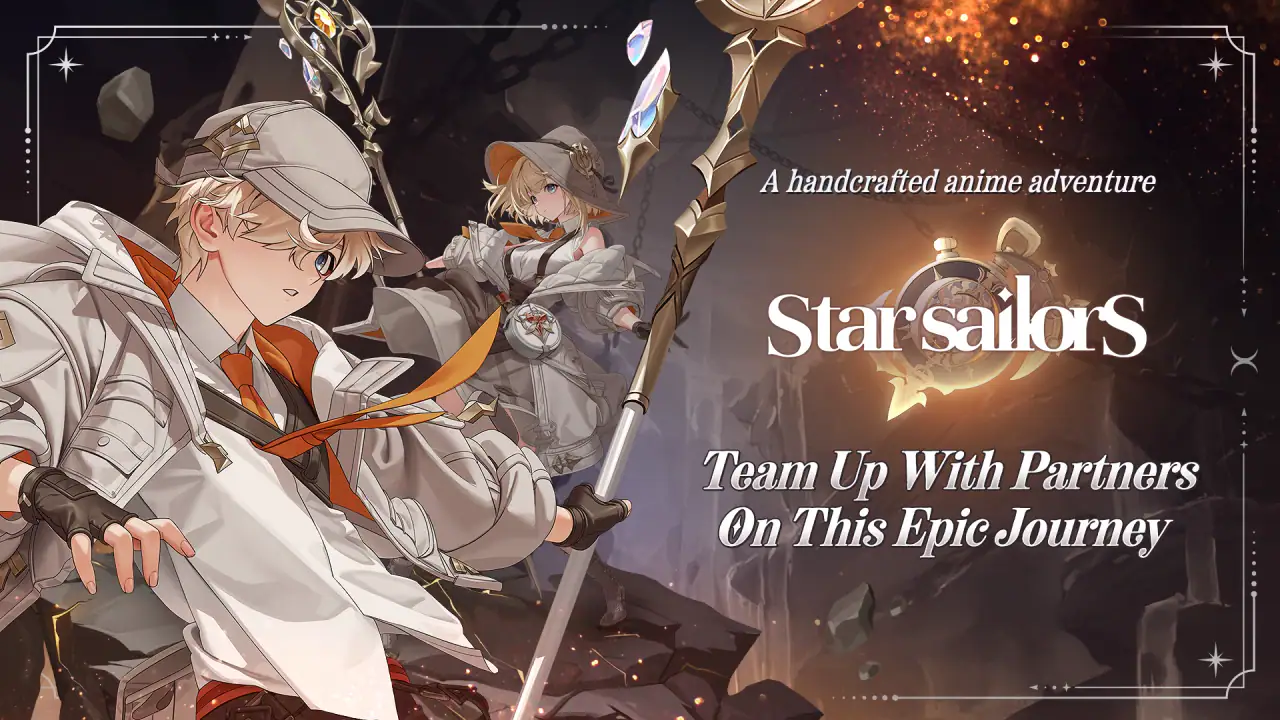
Star Sailors is a free role-playing game from Com2uS Holdings that immediately caught my attention with its space-themed presentation and its current collaboration focus. The store message highlights a TEASG collaboration with a guaranteed Lucy partner, but the real question for me is whether there is enough substance here beyond that limited-time attraction. After spending time looking at how the game presents its progression, spending options, and day-to-day appeal, I see it as a game aimed at players who enjoy collecting, developing a roster, and checking in regularly rather than rushing through one short adventure.
The game is available to download without an upfront purchase, which makes trying it straightforward. Its age classification is Teen, so I would still treat it as a game for older children and adults rather than a title designed for very young players. The current release is version 1.2.15, and it requires Android 9 or later. That combination makes the basic entry decision simple: if your device meets the requirement and you like role-playing games with a space setting, there is little financial risk in testing the opening experience.
How Star Sailors turns free access into a longer-term RPG experience
A space RPG built around ongoing involvement
What I found most important is that Star Sailors should not be approached like a single-player role-playing game with a clearly defined finish line. Its appeal is much closer to the routine of building a collection, improving your options, and returning to see what has changed. That structure can be satisfying because even a short session feels useful, but it also means the game asks for patience. Players who want immediate, constant action may find the rhythm slower than expected.
The space setting gives the game a useful identity. Instead of feeling like another generic fantasy adventure, it frames the role-playing experience through a world of star travel and sailor-themed characters. That difference matters when choosing between similar mobile RPGs: the setting may be the deciding factor for someone tired of castles, swords, and familiar magical kingdoms. On the other hand, players who mainly want deep exploration or a large open world should be careful not to assume that a space theme automatically means a full simulation of space travel.
I also think the collaboration is more than a decorative detail for the audience it targets. The store summary specifically calls attention to TEASG and a guaranteed Lucy partner, so fans interested in that crossover have a clear reason to start now. For everyone else, the collaboration is better viewed as an entry point rather than the entire justification for staying. A limited attraction can bring me into a game, but the underlying progression has to hold my attention after the novelty fades.
Related News






What “free” means in practical terms
Star Sailors costs nothing to install, and that is the most certain part of its value proposition. The game also includes optional purchases priced from $0.99 to $99.99 per item. That range tells me to approach the economy carefully, especially if I am the kind of player who feels pressure to keep pace with collectors or event participants. Free access is genuine in the sense that I can begin without paying, but the presence of purchases creates a second question: how comfortable am I with enjoying the game without buying the fastest route to progress?
I recommend deciding on a personal spending rule before the first attractive offer appears. For example, I might play through the early stages, understand what the normal progression feels like, and only then decide whether a purchase adds enjoyment rather than repairing frustration. This is particularly useful in a collection-focused RPG, where a new character or event item can feel more urgent than it really is. The safest value comes from treating purchases as optional entertainment, not as an entry requirement.
The free-to-play structure is a benefit for curious players because it allows a low-commitment trial. It is less appealing for anyone who dislikes recurring events, collection pressure, or the possibility that progress may feel more rewarding when spending is involved. Since the purchase range reaches from a small impulse buy to a much larger single item, I would not recommend starting with a large purchase before learning how the game fits my own play style.
Gallery
Where the game can fit into an ordinary day
A realistic use case is a player with a few spare moments in the morning, during a break, and in the evening. Star Sailors suits that pattern better than a game that demands a long uninterrupted session. I can imagine checking progress before work, making a few roster decisions at lunch, and returning later for a more deliberate session. That kind of schedule makes a collection-driven RPG feel manageable instead of demanding all my attention at once.
The trade-off is that short-session convenience can become routine. If I enjoy planning improvements and gradually strengthening a team, the repeated visits feel rewarding. If I need every session to provide a major story moment or a dramatic new discovery, the same design can feel repetitive. The value depends less on the number of minutes available and more on whether I enjoy small, cumulative decisions.
One practical tip is to avoid spending immediately after receiving a new character or collaboration reward. I would first compare that addition with the roster I already use, identify which role it improves, and then test whether it changes my actual results. In collection games, a rare-looking addition is not automatically useful. The best decision may be to invest in a balanced group rather than constantly replacing familiar choices with the newest arrival.
How it compares with other mobile role-playing games
Compared with a traditional premium RPG, Star Sailors is easier to sample because there is no initial purchase barrier. A premium game may offer a more contained experience and clearer ownership, while this title is designed around continued engagement and optional spending. Neither approach is automatically better. I would choose Star Sailors when I want a game I can revisit in small pieces, and I would choose a premium alternative when I want a self-contained adventure without a purchase-driven structure.
Against other free mobile RPGs, its space identity and the TEASG collaboration give it a more specific personality. That can make it stand out in a crowded category, particularly for players who collect characters because they like the world and its themes, not only because of combat efficiency. The downside is that fans of highly competitive RPGs may judge it by depth, balance, and long-term variety rather than presentation. Those players should spend time with the early systems before committing money or making it their main game.
It also differs from a simple casual collector because the role-playing label suggests that the point is not merely to obtain characters. I approached it with the expectation that choices, development, and team-building would matter over time. That means the game may reward attention more than passive collecting. If I only want a relaxed gallery of attractive characters, a lighter app could be a better fit; if I enjoy thinking about how additions affect a developing group, Star Sailors has more to offer.
Small decisions that improve the experience
My first recommendation is to establish a clear priority for the roster. Rather than spreading every resource across every character, I would choose a dependable core and develop it far enough to understand the game’s demands. This avoids a common mobile RPG problem: owning many options but having none developed enough to carry difficult content. It also makes new collaboration additions easier to evaluate because I can ask whether they solve a real weakness.
My second recommendation is to treat event rewards as planning opportunities, not emergencies. The Lucy collaboration may be the reason many people arrive, but chasing every related offer can blur the difference between a fun bonus and an expensive obligation. I would check what I can earn through normal play first, then decide whether optional purchases genuinely improve my enjoyment. That approach preserves the free entry point while still leaving room for a carefully chosen purchase.
My third recommendation is to pay attention to how the game feels across several sessions instead of judging it from one exciting opening. A new RPG often feels generous at the beginning, while the long-term rhythm becomes clearer later. I would use the early period to answer practical questions: Do I enjoy returning without a reward every time? Do I like improving a roster more than chasing a new one? Does the space setting keep my interest once the collaboration is no longer the main topic?
A fourth useful habit is to separate collection goals from performance goals. If I play only to obtain every appealing character, the purchase structure may become more noticeable and stressful. If I focus on making a small, effective group and view extra characters as optional discoveries, the game is easier to enjoy within a free budget. This distinction is not a minor detail; it changes how much pressure the same game places on me.
What may frustrate players
The clearest limitation is the tension between free access and optional purchases. A free download is welcome, but the broad purchase range means players need self-control. Someone who dislikes seeing expensive offers in a game may feel uncomfortable even if those offers are not required. I would especially avoid recommending it to people who prefer to pay once and remove all questions about in-game spending.
The second limitation is the likely commitment to repetition. A roster-based RPG needs repeated development to remain meaningful, and that can make the middle of the experience feel like maintenance. Players who enjoy optimizing small improvements will see that as depth. Players who want a steady stream of new locations, story scenes, or mechanical surprises may find the routine less satisfying.
The collaboration can also cut both ways. It gives the game a timely hook and may help new players decide where to begin, but anyone who is not interested in TEASG or Lucy may see that emphasis as less relevant. In that case, I would judge the title by its ordinary role-playing loop rather than by the event headline. The collaboration should enhance the experience, not substitute for one.
Device compatibility is another practical checkpoint. Android 9 is the minimum operating system, so anyone using an older phone or tablet should check that requirement before planning around the game. Even when a device technically qualifies, a player should still consider storage, battery use, and general comfort during longer sessions, although I would not treat those as reasons to reject the game without trying it first.
Who will get the most value from it
Star Sailors is a good match for players who like free-to-play role-playing games with a space identity, character collection, and gradual improvement. It is especially suitable for someone who enjoys having a long-term project on a phone: build a team, test additions, make incremental progress, and return when an event gives the roster a new direction. The collaboration provides an extra reason to begin for fans of the featured partner.
It also suits players who want to experiment without paying first. Because the download is free, I can learn whether the presentation and progression work for me before making a financial commitment. That is a meaningful advantage over paid RPGs, where the purchase decision comes before personal experience. The important condition is that I remain comfortable treating purchases as optional rather than necessary.
I would be more cautious about recommending it to someone who wants a complete offline-style adventure, a one-time purchase, or a game with no collection pressure. I would also point competitive players toward a careful trial period instead of a confident promise. The right question is not whether Star Sailors is the best RPG for everyone, but whether its particular mixture of space flavor, ongoing progression, collaboration content, and optional purchases matches the player’s priorities.
My verdict after weighing the value
The strongest reason to try Star Sailors is the combination of free entry and a distinctive space-themed role-playing identity. The TEASG collaboration and guaranteed Lucy partner give interested players a timely starting point, while the broader game offers a longer-term reason to keep developing a roster. Its average rating is 4.6 from around twenty-three thousand ratings, and the game has passed half a million installs, which suggests that it has attracted a substantial audience without changing the more important question of personal fit.
I would download it if I wanted a mobile RPG for regular check-ins, enjoyed collecting and improving characters, and could ignore purchases that do not fit my budget. I would begin slowly, learn the normal progression, and reserve spending for something I had already decided was worth it. That method lets the free version prove its value before money becomes part of the experience.
My recommendation is to try it for free, but keep your spending boundary firm. Star Sailors is not the right choice for every RPG player, especially those seeking a finished premium adventure or a completely pressure-free economy. For the right audience, though, its space setting, collaboration hook, and gradual roster-building loop make it an appealing game to explore. I would keep it installed if the small daily decisions felt enjoyable on their own; if they began to feel like chores, I would move on without treating optional purchases as the solution.
FAQs for Star Sailors
What is Star Sailors about?
Star Sailors is a space-themed game focused on exploring the galaxy, discovering unusual locations, and progressing through a sci-fi adventure. Players can expect a mix of navigation, missions, resource management, and encounters that gradually reveal more of the game world. Its appeal comes from the atmosphere, sense of discovery, and the feeling of building a personal journey among the stars.
Is Star Sailors free to download and play?
Star Sailors can generally be downloaded without an upfront purchase, but availability and pricing may vary depending on whether you use Android or iOS. Like many mobile games, it may include optional in-app purchases for cosmetic items, upgrades, resources, or other conveniences. Before downloading, check the store listing carefully, especially if the device will be used by children.
Does Star Sailors require an internet connection?
The internet requirements may depend on the specific mode and version of Star Sailors. Some basic activities may be available offline, while features such as account synchronization, online events, advertisements, purchases, or multiplayer interactions can require a connection. If you plan to play while traveling, test the game beforehand rather than assuming every feature will work without mobile data or Wi-Fi.
Is Star Sailors suitable for children?
Star Sailors may be suitable for younger players who enjoy space exploration, but parents should review the official age rating and store description before installation. The main concerns are usually optional purchases, advertising, chat or social features, and the amount of reading required. Device parental controls and purchase restrictions are recommended if children will play without direct supervision.
What devices are compatible with Star Sailors?
Compatibility depends on the operating system, device model, available storage, and the version of Android or iOS installed. Newer phones and tablets should provide a smoother experience, particularly if the game includes detailed graphics, animation, or online features. Before downloading, open the official store page to confirm the minimum requirements and make sure enough free space is available for installation and future updates.
Pros
- Relaxing space-themed gameplay with a calm
- atmospheric presentation.
- Simple controls make it easy for new players to start exploring.
- Colorful visuals give each journey a distinctive sci-fi feel.
- Short play sessions suit casual gaming on mobile devices.
- Exploration provides a pleasant break from competitive games.
Cons
- Progress may feel slow for players who prefer constant action.
- Limited gameplay variety can reduce long-term replay value.
- Some objectives may be unclear without careful exploration.
- Performance may vary on older phones or tablets.
- The relaxing pace may not appeal to players seeking intense challenges.


